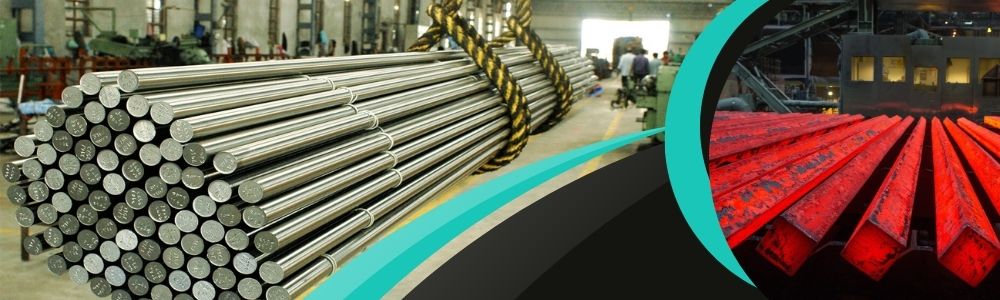
Permalloy Rods and Bars have extensive application in numerous industries because of their exceptional magnetic properties. Permalloy bars and rods are needed to make transformers, magnetic amplifiers, sensors, magnetic shields, inductors, and relays. Permalloy components in electronics and telecommunication industries are utilized in signal processing equipment, data storage devices, and microwave devices. The Permalloy rods and bars, because of their high permeability to magnetism, are the best option to shield delicate electronic circuits from electromagnetic interference. Their durability and reliability make Permalloy a material of choice for industrial and research uses.


Permalloy Rod and Bar contain mainly nickel (approximately 80%) and iron (about 20%), resulting in high magnetism and being suitable for electromagnetic purposes. They have low coercivity, high permeability, and good magnetic saturation. The mechanical characteristics are moderate tensile strength, good workability, and dry corrosion resistance. They tend to be cold-drawn or annealed for better magnetic response, which makes them appropriate for precision engineering and manufacturing magnetic components.
| Standards : | — |
| Thickness : | Range from .008″ to .0125″ |
| Hardness : | Soft, Hard, Half Hard, Quarter Hard, Spring Hard etc. |
| Form : | Bar |
| Tungsten Grades | HA 190 / HA 1925 / HA 195 / HE 390 / HE 3925 / HE 395 / HE 397 |
| C | P | S | Mn | Si | Ni | Cr | Co | Mo | Cu | Fe | |
| 1J46 | ≤0.03 | ≤0.02 | ≤0.02 | 0.6-1.1 | 0.15-0.30 | 45-46.5 | – | – | – | ≤0.2 | Balance |
| 1J50 | ≤0.03 | ≤0.02 | ≤0.02 | 0.3-0.6 | 0.15-0.30 | 49-50.5 | – | – | – | ≤0.2 | Balance |
| 1J79 | ≤0.03 | ≤0.02 | ≤0.02 | 0.6-1.1 | 0.30-0.50 | 78.5-81.5 | – | – | 3.8-4.1 | ≤0.2 | Balance |
| 1J85 | ≤0.03 | ≤0.02 | ≤0.02 | 0.3-0.6 | 0.15-0.30 | 79-81 | – | – | 4.8-5.2 | ≤0.2 | Balance |
| Grade | Resisitivity (μΩ•m) | Desinty (g/cm3) | CuriePoint℃ | HighSaturatedmagneto-strictioncoefficient λθ/10-6 | Brinellhardness HBS | σbTensile Strength MPa | σsYieldStrength MPa | Elongation (%)δ | ||||
| unan- nealed | an- nealed | unan- nealed | an- nealed | unan- nealed | an- nealed | unan- nealed | an- nealed | |||||
| 1J46 | 0.45 | 8.2 | 400 | 25 | 170 | 130 | 735 | 735 | 3 | |||
| 1J50 | 0.45 | 8.2 | 500 | 25 | 170 | 130 | 785 | 450 | 685 | 150 | 3 | 37 |
| 1J79 | 0.55 | 8.6 | 450 | 2 | 210 | 120 | 1030 | 560 | 980 | 150 | 3 | 50 |
| 1J85 | 0.56 | 8.75 | 400 | 0.5 | – | – | – | – | – | – | – | – |


Permalloy bars are generally not highly susceptible to galvanic corrosion, as they have good resistance to corrosion. However, when in contact with dissimilar metals, galvanic corrosion may still occur under certain conditions.
Yes, Permalloy bars can be welded, but due to their high nickel content, specialized welding techniques, such as TIG or laser welding, and proper precautions are necessary to maintain magnetic properties.
Permalloy rods are available in various sizes, typically ranging from 1/16" to 4" in diameter. Common finishes include bright, polished, or cold-drawn finishes, depending on the application requirements.





We provide products that come with both mill test certificates and third-party test certificates, ensuring the highest standards of quality and compliance.
Rupal Metals is a leading manufacturer, supplier, and exporter of high-quality bars, rods, and forgings, catering to various industries in Delhi, India
Copyright 2024 Rupal Metals. All rights reserved